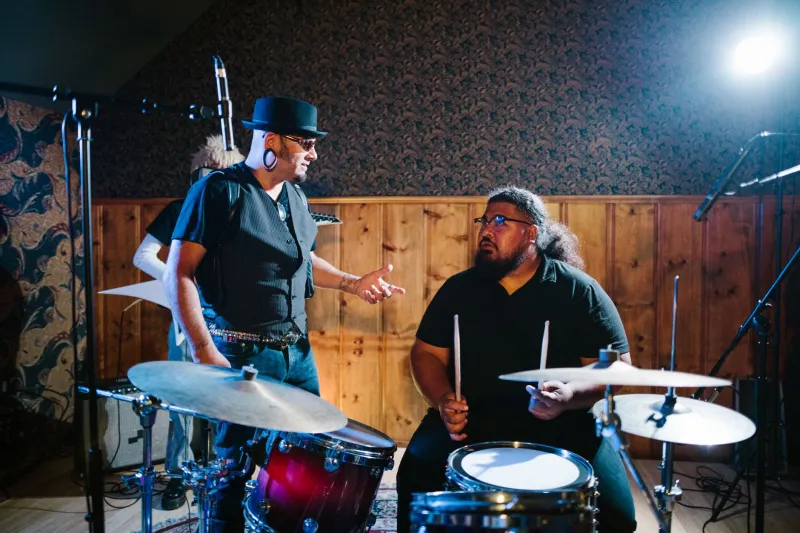
Pass It Down: Why Gen X Musicians and Older Millennials Can't Stop Giving Away Everything They Know
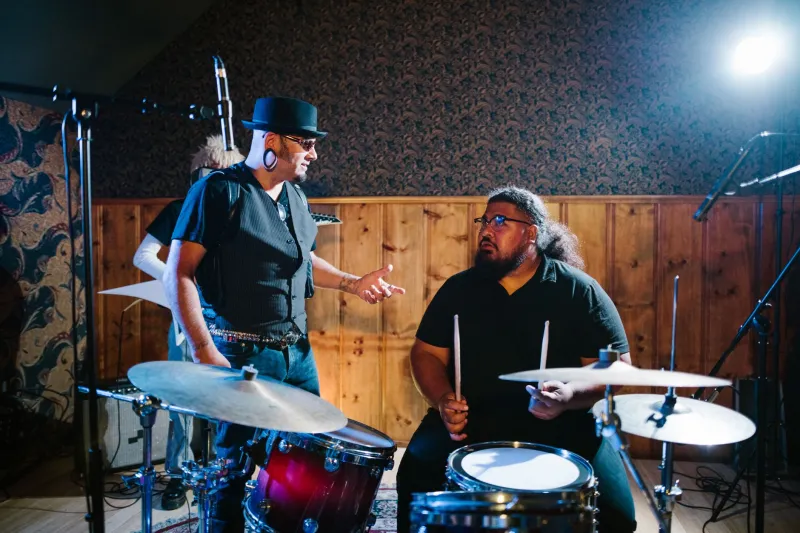
The Sudden Urge to Spill Everything
Ask almost any working musician or producer in their early 40s what they're focused on right now, and there's a decent chance they'll mention mentorship before they mention their own projects. Not because they've stopped making music — but because sharing what they know has started to feel as urgent as making it.
Something has shifted in the last few years among Gen X and older millennial creatives. The people who came up through an industry defined by gatekeeping, scarcity thinking, and carefully guarded professional secrets are suddenly posting master classes online, opening their contact books to strangers, and building mentorship programs with a fervor that can feel almost confessional. The question worth asking: what's actually driving this?
The Reckoning They Didn't Expect to Have
For a lot of people in this generation, the music industry was a place you survived by learning its unwritten rules and keeping them to yourself. You figured out how publishing deals worked — or didn't — the hard way. You learned what a 360 deal actually costs you after you'd already signed one. You watched labels retain masters and discovered, years later, what that meant for your long-term income. The information asymmetry was the whole game, and most people played it because they had no other choice.
"I signed contracts I didn't understand because I was 24 and nobody explained them to me," says Damon Whitfield, a New York-based producer and songwriter who has credits spanning indie rock, R&B, and hip-hop across a 20-year career. "And then I watched the same thing happen to younger artists I knew, and I thought — why am I not saying something? What am I protecting?"
That question — what am I protecting? — seems to be the engine running underneath a lot of this. For many established creatives, the act of giving away knowledge is also an act of reckoning with the gatekeeping they once accepted as inevitable, even natural. Keeping secrets felt like professionalism. Sharing them now feels like repair.
Is This Guilt or Generosity? (Probably Both)
Let's not be naive about the emotional complexity here. The impulse to pay it forward is real and often genuinely altruistic. But it's also tangled up with other things — anxiety about relevance, a desire to be seen as one of the good ones, and in some cases a quiet guilt about having benefited from systems that excluded a lot of people.
Social media has accelerated all of this. When younger artists are visibly building careers on platforms and with tools that didn't exist a decade ago, it's easy for established creatives to feel like the knowledge they accumulated — how to navigate a label meeting, how to structure a publishing deal, how to build a live show from nothing — is suddenly more valuable as a gift than as a competitive advantage.
"I think some of it is genuinely wanting to help," admits Carla Espinoza, a veteran music journalist and former A&R who now runs workshops for emerging artists in Los Angeles. "And some of it is wanting to matter in a landscape that's moving really fast. Those two things aren't mutually exclusive. You can want to give something real and also need it to mean something for yourself."
Her workshops cover everything from pitching to press to understanding sync licensing — the kind of industry literacy that used to require years of expensive trial and error. She charges on a sliding scale and has given away more free spots than she can count. "The information doesn't belong to me," she says. "It belongs to anyone who can use it."
The Guilt-Trip Nobody Asked For (But Maybe Needed)
There's a generational specificity to this moment that's worth naming. Gen X, in particular, came of age professionally during a period when mentorship was largely informal, often accidental, and frequently gatekept by race, gender, and class in ways that went unexamined. Older millennials entered creative industries just as the internet was beginning to disrupt them, absorbing both the old gatekeeping culture and the early language of openness and democratization — often holding both in uncomfortable tension.
The result is a cohort of established creatives who are fluent in the old rules and ideologically committed to a different way of doing things — and who are increasingly aware that the window for actually doing something about that tension is not unlimited.
"I'm 47," says Whitfield. "I'm not going to be the most relevant person in any room in ten years. That's fine. But what I can do right now is make sure the people who are going to be the most relevant people in those rooms have the information I wish I'd had at 25. That feels like a better use of my time than protecting turf I'm going to lose anyway."
What Actually Gets Transmitted
Here's what's interesting about the knowledge that changes hands in these mentorship relationships: it's rarely the stuff you'd learn in a music business course. The most valuable transmission isn't contractual or technical — it's attitudinal. It's learning to trust your own read of a situation. It's understanding that a label's enthusiasm is not the same as a label's commitment. It's knowing when to walk away from a deal that looks good on paper.
That kind of knowledge is almost impossible to put in a curriculum. It comes from relationship, from trust, from someone being willing to say this is what actually happened to me rather than this is how the industry works in theory.
For the mentees on the receiving end, what's often most transformative isn't the specific information — it's the experience of being taken seriously by someone who didn't have to. "It changes what you think is possible," says one emerging producer who has been working informally with a veteran mixer in Nashville. "When someone who's been doing this for 25 years treats your questions like they're worth answering, you start to believe your work is worth making."
The Thing That Makes It Real
The cynical read of this trend is that established creatives are laundering their relevance through generosity — building goodwill and personal brand equity by giving away what they no longer need to protect. And sure, that's probably part of it for some people.
But the more you talk to the people actually doing it, the more it sounds like something harder to categorize: a genuine reckoning with what the old system cost, and a bet — imperfect, complicated, not entirely selfless — that the next version of the music world should be built on less of it.