The Power of the Hard Pass: Why the Most Interesting Creators Are Doing Less on Purpose
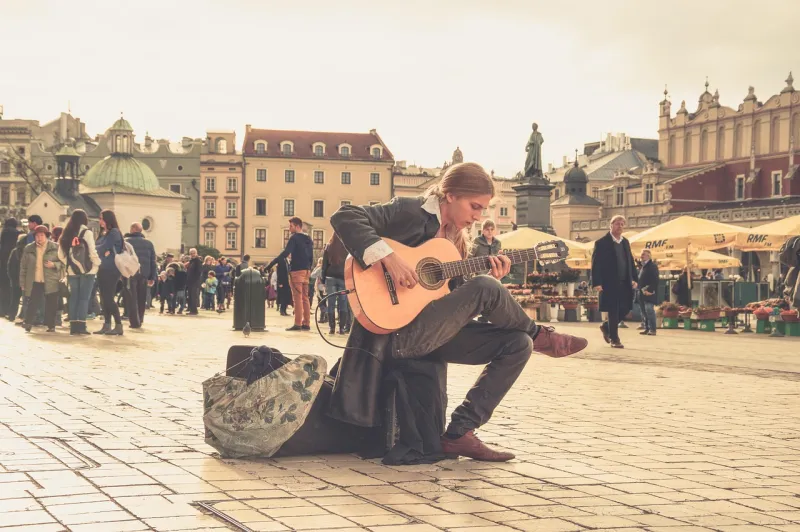
Photo: musician alone in small recording studio working on music quietly, via cdn.pixabay.com
Let's be honest about what the creative internet has been telling artists for the past decade: more is more. Post more. Collaborate more. Monetize more. Scale up, open up, say yes to everything that comes through the door because visibility is oxygen and you never know which opportunity is the one that changes everything.
A lot of creators bought into that. Some of them burned out spectacularly. Others built audiences so large they stopped recognizing the work they were making.
Now a quieter, more deliberate counter-movement is taking shape — and it looks a lot like saying no.
Scaling Down as a Creative Strategy
It's worth being clear about what we're talking about here, because "setting limits" can sound like burnout recovery dressed up in better language. This is something different. The creators worth paying attention to right now aren't scaling back because they hit a wall. They're making active, premeditated choices to limit their output, their availability, and sometimes their audience — because they've decided those limits are what make the work good.
Take the indie music world, where a handful of artists have quietly stopped releasing music on the major streaming platforms entirely. Not as a protest, not as a publicity stunt, but because the volume pressure of those platforms — the expectation that you're always feeding the algorithm, always releasing, always present — was warping the music itself. When the release schedule is driving the creative process instead of the other way around, something has gone wrong.
For some of these artists, stepping back from streaming meant releasing one record every few years instead of one EP every few months. It meant the work got stranger, more patient, more willing to take risks. It also meant smaller numbers. They made that trade deliberately.
The Collaboration Request Avalanche
Here's something nobody warns emerging artists about: success, or even modest visibility, generates an absolutely relentless flood of asks. Feature requests. Guest appearances. Playlist swaps. Brand partnership pitches. Collaborative project invitations. Other creators who want to "do something together" without a particularly clear idea of what that something is.
For musicians especially, this can become its own full-time job — managing the inbox, drafting polite declines, trying to figure out which opportunities are genuinely exciting versus which ones just feel exciting because someone is paying attention to you.
Several indie artists have started talking openly about implementing what amounts to a blanket no-collaboration policy for stretches of time — months, sometimes longer — during which they simply don't take on anything new with anyone outside their immediate creative circle. The result, nearly universally, is a period of unusually focused, unusually personal work. The kind of work that tends to be the most resonant.
The irony is sharp: the less available these artists make themselves, the more in-demand they become. Which creates its own pressure, but that's a different article.
Podcasters Who Stopped Chasing Downloads
The podcast world has its own version of this story, and it's particularly interesting because download numbers are the currency of that industry in a way that's almost impossible to ignore.
A small but vocal group of independent podcasters have started talking publicly about capping their ambitions — not just accepting a smaller audience, but actively structuring their show around staying small. Keeping episodes unsponsored. Avoiding the guesting circuit that inflates listener counts. Turning down distribution deals that would have expanded their reach but also introduced editorial constraints.
One podcaster who runs a show about experimental theater — with a listener base in the low thousands — described the decision like this: the show exists in conversation with a specific community, and growing beyond that community would mean making it for people who don't share that context. The intimacy would evaporate. The whole reason the show works would be gone.
That's not a failure of ambition. That's a sophisticated understanding of what the work actually is.
Visual Artists and the No-Growth Gallery
Visual artists have been navigating this tension longer than most. The pressure to maintain a consistent social media presence, to post process content, to be discoverable and legible and always-on — it hits painters, illustrators, and printmakers in ways that can fundamentally alter how they work.
Some artists have responded by retreating from social platforms almost entirely, selling work only through mailing lists or at in-person events, keeping production intentionally limited. The scarcity isn't manufactured for marketing purposes — it's a byproduct of working slowly and refusing to produce more than the work demands.
What's notable is how these artists talk about the experience. Not as deprivation, but as relief. The absence of a public-facing metrics dashboard means the work stops being in conversation with its own performance. You stop making things that look good as thumbnails. You start making things that hold up in a room.
What 'No' Actually Protects
There's a useful frame here that goes beyond individual mental health, as important as that is. When creators say no to growth, collaboration, or monetization, they're often protecting something structural about how the work gets made — the conditions under which it can be genuinely experimental, genuinely risky, genuinely theirs.
A musician who takes a brand deal is making a reasonable economic choice. But that deal introduces a relationship that didn't exist before, one with its own expectations and constraints. A podcaster who chases download growth starts programming for the algorithm, not the audience they actually have. A visual artist who posts daily process content starts making work that performs well as process content.
None of these things are inherently catastrophic. But they compound. And the artists who are most thoughtfully saying no right now seem to understand that the creative process is fragile in ways that only become visible after the damage is done.
The Radical Act of Enough
American creative culture has a complicated relationship with the concept of enough. Enough output, enough audience, enough income — these feel like ceilings rather than destinations. There's always a next level, and not pursuing it feels like failure.
But the creators making the most interesting case for limitation aren't arguing for mediocrity or complacency. They're arguing for a different definition of success — one where the quality of the work and the sustainability of the process matter more than the size of the numbers attached to them.
That's a genuinely countercultural position in 2024. It's also, increasingly, the position of some of the most creatively alive people working right now.
Saying no, it turns out, is its own kind of yes — a yes to the work itself, on the work's own terms. And in a landscape where everything is optimized for scale, that might be the most punk thing a creator can do.