The Un-Ownables: Meet the Artists Giving Their Work Away on Purpose
Let's start with the heresy: some of the most influential American art being made right now cannot be owned. Not "is hard to protect." Cannot be owned, by design, on purpose, with a license attached that says so.
And the people making it aren't naive. That's the part that should unsettle you.
The Ownership Economy Has a Competitor
We live in an era where the default creative posture is defensive. Watermark everything. Register the copyright. Send the takedown notice. The creator economy runs on the promise that your work is an asset, and assets need fences.
But spend any time around mural collectives, shared sound libraries, or public domain remix projects and you'll find a counter-movement operating on a completely different theory: that the freest work travels farthest, and the work that travels farthest builds the deepest community. Not despite being un-ownable. Because of it.
Look at What's Already Working
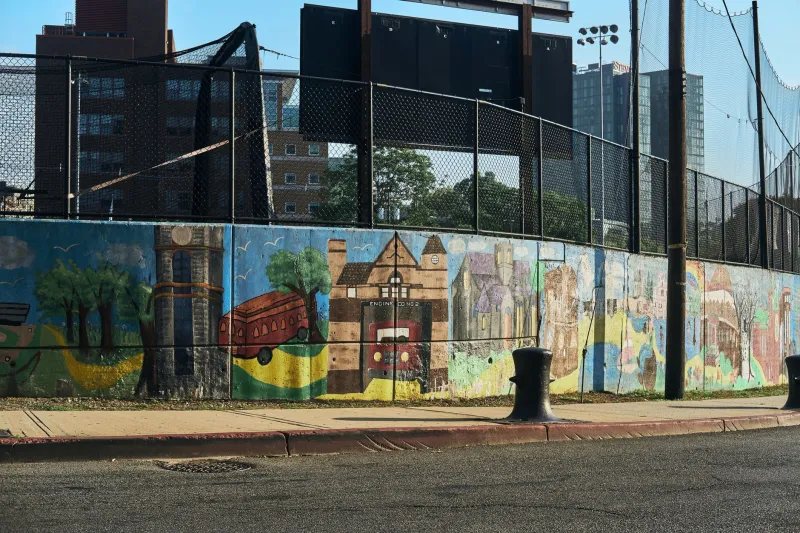
The mural commons. In Philadelphia — home of the country's largest mural program — and in cities from Albuquerque to Detroit, collective mural projects have quietly adopted open ethos: community-designed, sometimes explicitly licensed for reuse of the imagery, meant to be photographed, printed, remixed, and reimagined. The mural isn't a product. It's a seed. When a neighborhood kid paints a version of it on their notebook, that's not infringement. That's the point.
Shared sound libraries. Field recordists are uploading thousands of hours of free-to-use sound — rain on a New Orleans awning, subway rumble, a porch dog in rural Georgia — under Creative Commons licenses for anyone to build with. The recordists aren't losing income; most were never selling sounds. They're gaining something better: their recordings are inside other people's films, games, and songs, credited, traveling, alive.
The public domain party. Every January 1, a new batch of work enters the public domain in the US, and every year the celebration gets bigger. Independent musicians, filmmakers, and publishers are building entire projects on public domain material — re-scoring silent films, remixing old folk recordings, illustrating stories that finally belong to everyone. The unlicensed sample pack scene runs on the same fuel: sounds offered up with no strings, because the pack-maker knows the real currency is being inside everyone's DAW.
The Radical Math of Giving It Away
Here's the opinion part, since you asked: I think this is the most radical act happening in American creative culture, and the reason is mathematical.
Ownership is a constraint on circulation. Every fence you build around work reduces the number of people who can touch it, build on it, love it. That's the trade — control for reach. Fine. But the un-ownables made the opposite trade, and the compounding is wild. A CC-licensed sample ends up in a bedroom producer's track, which ends up in a TikTok dance, which ends up in a Super Bowl ad, and the original recordist — who gave the sound away for free — is suddenly the most sampled name in a genre they've never heard of.
Nobody gets rich this way. Everybody gets connected this way. And connection, it turns out, is the thing the ownership economy is worst at providing.
Not Naive — Strategic
The critics' objection writes itself: how do these artists eat? Fair question, and the honest answer is messily, like most artists. But look closer and you'll see the strategy. Giving away the work builds reputation, and reputation is the one asset that can't be copied. The mural collective gets commissioned because everyone's seen the murals. The sound recordist gets hired because everyone's used the library. The remix artist gets booked because the remixes are everywhere.
They're not refusing ownership out of purity. They're refusing it because they've calculated — correctly, I'd argue — that in a culture drowning in protected content, the generous work stands out. Free isn't a lack of business model. Free is the marketing.
Art That Belongs to Everyone
There's an old idea, older than copyright, that art is a commons — something we make together and hand to whoever comes next. The ownership economy spent a century telling us that was naive. The un-ownables are spending their careers proving it wasn't.
Next time you see a mural and take a photo, or drop a free sample into your track, or remix something old into something new: congratulations. You're not a customer of that art. You're a co-owner. Which is to say, a participant. Which is to say, exactly what the artists intended.